Showing posts with label kenya safaris. Show all posts

Saturday, September 17, 2011

Kenya home of long distance runners


The Kalenjins are estimated to have a population of about 2.7 million people according to 1993 census. They are an ethnic grouping of eight culturally and linguistically related groups or "tribes". These include; the Kipsigis, Nandi, Tugen, Keiyo, Marakwet, Pokot (sometimes called the Suk), Sabaot (who live in the Mount Elgon region, overlapping the Kenya/Uganda border), and the Terik. Their present-day homeland is Kenya's western highlands and the Rift Valley.
Together, the Kalenjin comprise Kenya's fourth-largest ethnic group. The Kipsigis are the largest Kalenjin population, with approximately 470,000 people.
The word “kalenjin” means I say to you in Nandi. Although not all kalenjins are Nandi the name kalenjin has also been used to refer even to the non nandi dialects such as the Kipsigis, Marakwet, Pokot and Tugen.
They migrated to this area 2000 years ago from southern Sudan. The majority of kalenjin groups have taken up agriculture from pastoralist which formed their original behavior. Some, however such as the Okiek have remained in the forests doing hunting and gathering. Beekeeping was also a common activity and the honey was used not only in trade but also for brewing beer.
For both males and females, becoming an adult in Kalenjin society is a matter of under-going an initiation ceremony. Traditionally, these ceremonies were held about every seven years. Everyone undergoing initiation (tumdo) thereby becomes a member of a named age-set (ipinda).
Polygamy was widely practiced, although most men cannot afford the expense of such unions because of the burden of paying the bride price. Regardless of the type of marriage, children were regarded as a blessing from God
Administration of the law is carried out at an informal gathering of the clan’s elders and other interested parties in the dispute called kok.
Unusual with other Kenyan tribes, Kalenjin doctors were usually women who used herbal remedies for their practices. They also had other amazing specialist doctors who could take out pieces of skull to cure certain ailment which is also practiced by the Abagusii and Kisii people.
Traditional Kalenjin clothing consists of skins of either domesticated or wild animals. Earrings were common for both sexes in the past, including heavy brass coils that made the earlobe stretch down almost to the shoulder. The staple Kalenjin food is ugali (a cake-like, starchy food that is made from white cornmeal mixed with boiling water and stirred vigorously while cooking. It is eaten with the hands and is often served with cooked green vegetables such as kale (sukumawiki)

PKP- Kenya safari
Natural Track safaris

Wednesday, July 13, 2011

The smallest tribe in kenya

The little known El molo tribe is the smallest tribe in Kenya living on the southeastern shore of Lake Turkana. El molo's total population is about 4000 people but pure Elmolo people are very few. The name El molo came from a Maasai Phrase meaning "Those who make a living from other sources other than cattle".

The Samburu name for El molo is "loo molo onsikirri" which means "the people who eat fish". Unlike the Turkana and the Samburu, the El molo do not depend on livestock for their livelihood. Their main diet is fish and occasionally crocodile and hippo from Lake Turkana. They live in small huts made of the doum palm fronds with supports made from the few acacia trees available. They dress following Samburu custom- beads and goat or fish skins, incorporating many of the lake artifacts such as fish bones and teeth.

The elder still dress traditionally, the youngest wearing the traditional 'selah' and the school age youth dress mostly western. Life expectancy is short due to their diet and health problems with people usually living up to 35-45 years. Women and children have high mortality late while men engage in dangerous fishing and hunting activities. Their social customs have also contributed into their low population.


PKP- Kenya Safari desk

Natural Track Safaris

THE SAMBURU PEOPLE

The Samburu are semi nomadic people who inhabit an arid region in northern Kenya they belong to the Maa speaking group of people. They have traditionally herdeded cattle, though lately some have taken up farming. The Samburu share many customs with the Maasai. Changes in lifestyle have come as Samburu have traveled to other parts of Kenya. The Samburu tongue is also related to Turkana and Karamojong, and more distantly to Pokot and the Kalenjin languages. The Samburu have been in a somewhat defensive position with surrounding peoples moving around them.

They have maintained a military and cultural alliance with the Rendille, largely in response to pressures from the expanding Oromo (Borana) since the 16th century. Generally between five and ten families set up encampments for five weeks and then move on to new pastures. Adult men care for the grazing cattle which are the major source of livelihood. Women are in charge of maintaining the portable huts, milking cows, obtaining water and gathering firewood. Marriage is a unique series of elaborate ritual. The marriage is concluded when a bull enters a hut guarded by the bride's mother, and is killed. Fertility is a very high value for the Samburu. A childless woman will be ridiculed, even by children.

Duties of boys and girls are clearly delineated. Initiation is done in age grades of about five years, with the new "class" of boys becoming warriors, or morans. (il-murran) which involves training in adult responsibilities and circumcision for boys and clitoridectomy for girls. The moran status involves two stages, junior and senior. Samburu are very independent and egalitarian. Community decisions are normally made by men (senior elders or both senior and junior elders but not morani), often under a tree designated as a "council" meeting site.

The Samburu love to sing and dance, but traditionally used no instruments, even drums. They have dances for various occasions of life. Their own traditional religion is based on acknowledgment of the Creator God, whom they call Nkai, as do other Maa-speaking peoples. They believe in charms and have traditional ritual for fertility, protection, healing and other needs. The Samburu have many traditions and ceremonies for every occasion including the killing of a sheep for the birth of a baby; initiation or graduation rites as they prepare to become adults and marriage ceremonies which may occur after the initiation ceremony.

Girls generally marry between the ages of twelve and fifteen and boys usually, in their mid twenties. Boys become murrani or junior warriors for about five years and then go through another ceremony to become a senior warrior. Samburu girls hope to become "beaded" by their favorite warrior. If the young man likes the girl, he will give her layers of necklaces and pay a bride. The Samburu wear their traditional attire which is a bright red material worn like a skirt.

They also wear multi-beaded necklaces, bracelets and earrings. Moran is a term used in both Maasai and Samburu community to refer to a warrior. Like the Maasai, the Samburu also mix blood and milk to make their traditional drink.

PKP- Kenya safari desk

Natural Track Safaris

Saturday, April 2, 2011

The Akagera national park


Akagera National Park is located in the east of Rwanda on the border with Tanzania near Kibungu town. The park covers over 2500 sq km of savannah west of the Kagera River, which designates the frontier with Tanzania. The park hosts, leopard, hyena, lions and more than a dozen types of antelope. Also found in and near the lake are large pods of hippopotamus as well as portentous crocodiles basking in the sun.

The park is comprised of swamps, lakes, savannah, woodland and open grassland. The lakes draw out herds of elephant and buffalo, while the savannah typically attracts giraffes and zebras. That is just the beginning! For the bird-lover, you can be entertained by majestic fish eagles and the large concentration of waterbirds. In the marshes, keep an eye out for the papyrus gonolek and the often sought-after shoebill stork.

Quoting from words of great environmental writers - “Akagera, with its complex mix of terrains, vegetation and animal life is a very special place on earth – a place to preserve at all costs for future generations".

With its perfect location, Akagera National Park could scarcely be more different in mood to the breezy cultivated hills that characterise much of Rwanda. Dominated scenically by the labyrinth of swamps and lakes that follow the meandering course of the Akagera River, the most remote source of the Nile, this is archetypal African savannah landscape of tangled acacia woodland interspersed with open grassland.

Akagera comes as an exciting surprise after the steep cultivated hills and breezy climate that characterizes the rest of the country. Set at a relatively low altitude along the Tanzanian border, this beautiful game reserve protects an African savannah landscape of tangled acacia and brachystegia bush, interspersed with patches of open grassland and a dozen swamp-fringed lakes that follow the meandering course of the Akagera River.

Akagera is, above all, big game country. Herds of elephant and buffalo emerge from the woodland to drink at the lakes, while lucky visitors might lurch across a leopard, a spotted hyena or even a stray lion. Giraffe and zebra haunt the Savannah, and more than a dozen types of antelope inhabit the park, most commonly the handsome chestnut-coated impala, but also the diminutive oribi and secretive bushbuck, as well as the ungainly tsessebe and the world's largest antelope, the statuesque Cape eland.

Lining the lakes are some of the continent densest concentrations of water birds, while the connecting marshes are the haunt of the endangered and exquisite papyrus gonolek, and the bizarre shoebill stork - the latter perhaps the most eagerly sought of all African birds.

Camping alongside the picturesque lakes of Akagera is a truly mystical introduction to the wonders of the African bush. Pods of 50 hippos grunt and splutter throughout the day, while outsized crocodiles soak up the sun with their vast jaws open to cool down abit. Magically, the air is torn apart by the unforgettable high duetting of a pair of fish eagles, asserting their status as the avian monarchs of Africa's waterways.

There are accommodation facilities on the edge of the park at Gabiro, 100km (60 miles) to the north. It is best not to visit the park in the rainy season (December, March and April) since many of the routes become impassable.

PKP- Kenya Safari desk

Natural Track Safaris


Tanzania – Unique and Diverse


Budget camping safaris are among the most popular options for visitors who want to explore Tanzania’s numerous game parks and conservation areas the cheapest, most adventurous way. They are a rewarding experience because you feel you are ‘roughing it’ and participating in a real African adventure, but still have all the benefits and comforts of safari drivers, guides, and a cook to take care of all their needs.

The safaris embark on a circuit of national parks and game reserves just like other more expensive vacations, and you get to feel that you are experiencing an ‘on the ground’ adventure by camping in beautiful locales.


Booking a camping safari can be done directly through the tour operator from your home country. Or, if you are travelling through Tanzania and have a few days to spare, you can book directly through the company’s office in Tanzania.

Often, individual participants find a company and book their trip, then the tour operator is responsible for finding enough numbers to fill a car, preparations are made, and the group embarks on safari. Visitors are often expected to help pitch camp and bring their own camping equipment, but the cooking and cleaning is all left to the camping staff.

‘Fly camping’ is the term for luxury walking safaris where visitors sleep out in the open with only a mosquito net between them and the African sky. For many visitors, fly camping is the height of their Tanzanian experience - the sheer vastness of their surroundings, the peaceful rhythms of nature, and the opportunity to be alone in the African bush is a stunning and memorable experience.

Guests often embark on day hikes through the bush with their private guide, and camp is set up each evening in a new locale. These mobile walking safaris give visitors a chance to see the wildlife and birds of the game reserves up close, and experience their natural surroundings without the distraction of vehicles and other guests.


Visitors learn to read animal tracks, explore the medicinal properties of indigenous plant life, and immerse themselves in the vast world of insects and bird life that sustains the vast African plains.

Hike lengths can be varied according to difficulty and length each day, and the guided walks introduce you to a living, breathing world that extends beyond the big game of other mainstream safari options.

Fly camping is fast becoming the most popular option for luxury safari guests who want to experience the freedom and adventure of camping in the African bush without the encumbrances camping often entails. At present, fly camping is only available in the Selous Game Reserve, but due to its popularity, other game reserves may include it as a safari option soon.

Camping safaris in Tanzania are in deed unique and diverse and every human being should experience it at least once.


PKP- Kenya safari desk


Natural Track Safaris

Thursday, December 30, 2010

Hyena that hunts birds

The spotted Hyena (crocuta crocuta) of Africa has been known to be a greedy scavenger who largely feeds on left-overs from kills of other predators, mostly depicted as cowards and poor hunters.

You must have heard of this common myth which says that ‘if you are taller than the hyena it will not attack you but if you are shorter it will attack you’, which many of us have believed without even seeing a Hyena itself.

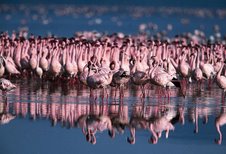
The real truth is that, these strong jawed creatures have crudely proved in many occasions to be aggressive and intelligent hunters. The spotted hyenas of Lake Nakuru have proved this point beyond any shadow of doubt, they hunt flamingos.

A kenya safari to Lake Nakuru will take one to the Commorant lakeshore for a stopover that presents a panoramic splendor of water fowls, the flamingos, pelicans, gulls and a host of other birds. One is most likely to spot the hyenas outside their den basking in the sun or wallowing in muddy pools with their young ones.

Adult hyenas hunt solitarily, mostly between dusk to dawn. When approaching flamingos the hyena lowers its head to a reasonable distance, dashes and grips the flamingo as they scamper for safety. It has become apparent that this new delicacy is increasingly being preferred by hyenas in Lake Nakuru. In most places, hyenas, like other carnivores adapt to feeding what is available to them in that particular reserve/park.

The state at which the lure for this strange action has been observed is just unique. In the past few years you would rarely spot hyena's along the shores, especially the Cormorant shores, but today, you can easily find them in big numbers lying sluggishly on the beach as they await for any opportunity to pounce.

Seeing is believing or so they say, a visit is inevitable for who knows how long this spectacle will last before the hyenas switch to a different delicacy that will send them deep into the forest and make them hard to see.

PKP-Kenya safari desk

Natural Track Safaris

The newest wildlife sanctuary in Kenya

As you drive on the Nakuru-Nairobi highway the sight of Lake Elementeita will certainly catch your attention especially with its pink coloured islands and shorelines. You may as well spot gazelles and zebras grazing on the open plains. This is Lake Elementeita, a soda that is the newest wildlife sanctuary in Kenya today.

Lake Elementeita is the only breeding ground for the great white Pelican in Kenya and neighbouring countries. These fish-eating birds nest on rocky islands in the lake. In addition, the lake attracts visiting flamingos, both the Greater and Lesser varieties, which feed on the lake's crustaceans and insect larvae and on its suspended blue-green algae, respectively.

The lake surroundings have a rich history. Nearby is the Kariandusi Museum, which is an important prehistoric site where stone hand-axes and cleavers were discovered in 1928 by Louis Leakey. Elementeita Badlands is a lava flow to the south of the lake covered in bush and including some spectacular scenic peaks in the nearby Utut area

The survival of Lake Elementeita and its environs have been threatened by incompatible land use practices. KWS has been working with the stakeholders around Lake Elementeita and its catchment area to come up with mitigation measures. This led to the formation of an organization called Greater Lake Elementeita Conservation Area (GLECA) to push for the enhancement of conservation status of the area. After a series of consultation with stakeholders including the local communities, it was finally agreed that Lake Elementeita be accorded the status of protected area.

The Minister for Wildlife and Forestry Hon. Dr. Noah Wekesa formally gazetted it on 6th July 2010 as a Wildlife Sanctuary. The sanctuary is approximately 2533.9 hectares.

Following the gazettement, KWS and GLECA are now working towards completion of the sanctuary’s Management Plan which will chart out issues to do with environmental conservation, tourism, and community enterprise and business development among others. KWS and GLECA are in the process of demarcating the boundaries, developing infrastructure and stationing personnel in the area to ensure illegal activities that are detrimental to the ecological integrity are checked.

With this new development it is expected that tourism activities will be improved and diversified for the benefit of the local community while at the same time securing space for wildlife.

Lake Elementeita together with Lakes Nakuru and Bogoria has also been nominated for enlistment as World Heritage Site. We look forward to that. Have a nice visit in these Rift Valley lakes.

PKP-Kenia Safari desk

Natural Track Safaris