Thursday, March 11, 2010

Amboseli on the scope..

Kenya safari: Amboseli National Park

Good news..……...
Wildlife censuses in Amboseli has been completed. And hurraaay!! it is not as bad as was feared. Prolonged drought made naturalists and nature enthusiasts worried. For a while, and rightly so, as many carcasses could be found in the field, scattered. Both wildlife and livestock, nothing was spared.

The census was completed on 4th March 2010, and though official results have not been published yet, preliminary results on key species like wildebeests, Zebras, Elephants among others indicate a healthy population, already on the start to the path of recovery.

The census data collection also included observations on habitat conditions, water distribution, livestock numbers, human settlement patterns, illegal activities, and other attributes associated with the land and the general contribution to changes in the ecosystem.

The census covered the entire 14,000 km square Amboseli ecosystem, including the 390 km square Amboseli National Park and the surrounding community ranches, Nguruman-Magadi area in Kajiado as well as the West Kilimanjaro region up to Lake Natron in Tanzania. The joint aerial operation was succesfuly completed, with the Tanzanian team expected to finish its operation by the weekend.
There was great need to asses the situation of the adjacent lands as they play an itegral part as feeding grounds during certain seasons.

We look forward to the final results next week, see you then.

Update by Simon Njoroge
Kenya safari desk
Natural Track Safaris

Frogie frogie day.....

Croak! Croak! Croak!

How many times have you heard heard them and ignored them? or how many times have you paid attention to their presence? But for others, we have been fascinated by the beautiful voices but others got enraged by the loud "noise" disturbing you.

Usually the loud noise is made by the male frogs calling to attract females to the breeding sites for mating. Mostly it takes takes place during the rainy seasons. The males also call to announce the territories so as to keep off other males.

Frogs going silent Noticeably, these amphibians are going silent globally. And the sad thing is that the decline is happening even in forests where there is no human interference! We destroy amphibians' breeding habitats when we drain wetlands that serve as their breeding sites, when we remove trees or natural vegetation used for breeding and refuge by adults or when we alter the flow of streams and rivers. Climatical change is playing its part too, in addition to the invasive species, hemical contamination and infectious diseases to mention but a few.Viral and fungal diseases have resulted in mass deaths in the prestine areas.

A thing we should all note..
Frogs permeable soft skin can help us to tell the health of our environment.
The skin allows for moisture to pass through it easily. Unfortunaly, substances like pollutants enter their bodies and therefore frogs are amongst the first animals to disappear in cases of environmental pollution.

While in some countries they are considered a delicacy, they are a needed meal by many species of fish, snakes and birds So before diverting that stream, or clearing those bushes/trees irresponsibly, think of how much damage you will cause in the food chain.

Become a frogie friend...Start by observing and amphibians in your neighborhood, and enjoy the beautiful sounds, and magnificent colors.
When it rains, have a frogie day, go out listen to them, compare colors and record the differences. And if you come across pond/pool/river with dead frogs, its time to call the authority and have it checked: Do not drain chemicas and sewage to the rivers or pools.

These guys are on decline worldwide, and we are responsible. Other generations need to hear them too, tour resposibly and respect their right to live.

Have a Frogie-happy outing.

By Peter K. Philip

kenia safari desk
Natural Track Safaris

Saturday, December 12, 2009

Africa wildlife series: The Nile Crocodile

Kenya wildlife safaris: The Nile crocodile

Among many reptile species in Africa, the crocodiles have somehow stolen the arena by being the most vocal and other adaptations. Unlike other reptiles they do not shed their skin and instead grow with it. These dinosaur-like creatures are usually spotted while basking in the early morning sun and late afternoon on the river banks. In the middle of the day when temperatures are higher they lie in the shallow waters sometimes with half of the body partially submerged. It is their way of warming up or cooling behavior.

Being creatures of the water, they are great swimmers and divers. Their respiratory system has a tissue flap that seals off while under water. These enable them to open the mouth and not choke underwater. In addition, crocodile's nostrils close while diving and the same case happens with the external ears. Most reptiles do not have the external ears. Their vision under the water is very good and is facilitated by the nictitating membrane (transparent third eye membrane). This keeps water out of the eye hence no vision interference.

What's more, the tail acts as a oars that helps them maneuver while in the water. They use the tail also for feeding whereby they can disorient schools of fish with strong strokes and catch them. Crocodiles never stay far away from the water. Incase the pool or swamp dries they too die. Their preference is the permanent rivers but on occasions they can be spotted in seasonal rivers especially during the heavy rains whereby they avoid the strong currents. Immediately when the rain subsides they return to their territories.

On land, the crocs can walk fairly fast, up to about 28 miles an hour. Although the back legs are webbed, this does note interfere with their walking on land. Despite this, they do not wader too far from the water. Though they are termed as hunters, their hunting method mostly lying low and wait for their victims to come to drink. Then they thrash forward and grab them, drag and drown them under the water. Their teeth are especially formatted to seize and hold the prey. With crocodiles you can see the two front teeth of the lower jaw.

These lizard-like reptiles live in big groups and can be up to several hundreds. Usually the big males are in charge but it is more of domination than organized social leadership. There is no known coordinated group activity apart from feeding together.
There feeding method is by tearing chunks from the victim and this may sometimes include spinning of the whole body while holding tight with the teeth.

The crocodile (Nile crocodile) reach sexual maturity at the age of 8-12 years. Then they can mate, and after about 60 days the female is ready for laying eggs. She digs a hole and lays her eggs there. She can lay between 20-90 eggs. The eggs are heavily calcified and chicken-egg sized. Inside the buried egg, the temperatures rise to over 90 degrees.

After about 90 days later the hatchlings calls for the mother through hissing and she digs them out. Then she moves them to the water. This is a critical stage as most of them are predated on. Among the predators includes birds of prey,( eagles, hawks, vultures..), monitor lizards, among others. Usually when the mother senses danger to her young ones she can put them inside the mouth (gular pouch) for protection. The few survivors are free from the mother after two years and ready to face the world alone.

Note that crocodiles have no sweat glands. They lose heat through their mouths cavities. During your Kenya safari, you will see them sun-bathing with the mouth open and sometimes panting like dogs. Their color ranges from dark green, to a black-grayish but with a lighter belly. The body is covered with scales and they never shed them.

Their diet varies from small to large animals and in Kenya they have been known to catch birds. Their ectothermic metabolism is very efficient in that the huge crocs can stay for several months without food.

Crocodile have been known to attack and kill people. There are many cases of cows being attacked when they come to drink. Though CITES have classified them endangered, the populations in Kenya and Tanzania are very healthy.
It is their habitat that is in constant danger from intrusion, pollution and fishermen's nets.

Natural Track Safaris
Kenya safari Desk

Africa Wildlife series: A thing or two about Elephants


One of the dominant wildlife in the main Kenya wildlife safari parks.

The elephant is one of the most interesting and beautiful creatures on earth. During our Tanzania and Kenya holidays we meet this creature in numerous numbers. It is the largest animal on land with some bulls growing up to about thirteen feet tall. They can weigh up to seven tones for the bulls- about the weight of a truck.
Elephants are unique in that they smell, eat, and wash themselves using their long flexible trunks. In addition they have elongated teeth made of ivory that aid them in getting food. They do use them also to lift heavy objects including pushing down trees. These teeth are called tusks.
African Elephants in Samburu,Kenya
The most obvious characteristic of elephants, besides their massive size, is their trunk. The trunk is nothing more than an elongation of their nose and upper lip. Besides being used for breathing and smelling it is also used as an appendage, much like an arm or hand. Elephants are capable of pulling up to 11.5 liters (3 gallons) of water into the trunk to be sprayed into the mouth for drinking or onto the back for bathing. As seen on most Kenya safaris, they use their two finger-like projections that are at the tip to manipulate small objects and to pluck grasses.
Elephants eat grass, small branches, and bark from trees. They especially like leaves from the top branches. They get the leaves by pushing down the trees with their large heads and bodies. Then they get the bark by scraping it with their sharp tusks.
Most elephants live in the grasslands of Africa and in the forests of Asia. They live in groups called herds. The herd is typically composed of up to ten females and their young. All of the females in the herd are directly related to the matriarch, who is typically the oldest and largest female. Males beyond the age of maturity are with the herd only during mating. A herd is a group that may have ten or more elephants. It is usually led by a female elephant. Herds have been known to travel ten miles or even farther to look for food and water. When elephants travel, they walk very quietly in single file. Young elephants are led by the older elephants with their tails. They stay close to their mothers at all times. The entire herd will protect the young ones if there's any sign of danger.
Elephants love water and are very good swimmers. When they get hot, they swim in lakes or rivers, or give themselves showers using their long trunks. An elephant can also cool off by rolling in a shady bed of mud.
Young elephants stay with their families for many years. It's not unusual for a herd of elephants to live together all of their lives. They are also capable of making low frequency sounds that are below the human range of hearing; this allows wandering individuals within the herd as well as several different herds to stay in direct contact over distances of many miles.
Did you know that?
  • · Elephants stomp when they walk.
  • · Elephants sleep standing up.
  • · Sometimes baby elephants lie down to sleep.
  • · Elephants bathe. Sometimes they spray dirt on themselves or bathe in mud to get the parasites off.
  • · They cool off by fanning their ears. This cools the blood in their ears. That blood goes to the rest of their body and cools off the elephant.
  • · They poop 80 pounds in one day.
  • · Elephants weigh about 10,000 pounds. It would take 250 students to add up to 10,000 pounds.
  • · Only grown up ladies and their babies live in the herds.
  • · The bull elephants leave the herd when they are 12 years old.
  • · They fight with their tusks.
  • · They eat grass and bark.
  • · During the wet season they eat things low to the ground.
  • · During the dry season they use their trunk to gather food from trees and bushes.
  • · They suck up water into their trunks and shoot it into their mouths.
  • · Elephants need lots of room to roam and eat.
  • · They can run 24mph for short distances.
  • · Elephants perform greeting ceremonies when a member of the group returns after a long time away. The welcoming animals spin around, flap their ears, and trumpet.
  • · The blue whale weighs as much as thirty elephants, and is as long as three greyhound buses.
  • · What do bats' wings, elephants' ears, flamingos' legs, rabbit's ears, goats' horns and human skin all have in common? They radiate heat to provide cooling.
  • · Female elephants produce one calf every five years.
  • · Genuine ivory does not only come from elephants. It can come from the tusk of a boar or walrus.
  • · Mice, whales, elephants, giraffes, and humans all have seven neck vertebras.
  • · African elephants have larger bodies, bigger ears, less bumpy foreheads, and longer tusks than Asian elephants.
  • · African elephants only have four teeth to chew their food with. However, each tooth is 12 inches long, and their tusks are elongated teeth that grow throughout their lives, like fingernails.
  • · At birth an Asian elephant weighs around 440 pounds (200 kilograms) and an African elephant weighs 581 pounds (264 kilograms). By adulthood both types of elephants will weigh close to 4 tons.
  • · Elephant tusks grow throughout an elephant's life and can weigh more than 200 pounds. Among Asian elephants, only the males have tusks. Both sexes of African elephants have tusks.
  • · Elephants and short tailed shrews get by on only two hours of sleep a day.
  • · Elephants are covered with hair. Although it is not apparent from a distance, at close range, one can discern a thin coat of light hairs covering practically every part of an elephant's body.
  • · Elephants communicate in sound waves below the frequency that humans can hear.
  • · Elephants have been known to remain standing after they die.
  • · Heart and liver: The elephant heart weights about 22kg and circulates about 450 liters of blood. Inner "cleaning" is performed by a 77kg liver.
  • · Water and trunk: To drink its 11 litres of water at a time, the elephant uses its trunk which weighs about 113kgs.
  • · Tongue: Helping the swallowing process is a 12kg elephant tongue.
  • · Food and intestines: The approximately 250kg food eaten every day passes through 18m of intestines. Eventually processed into about 100kg of elephant dung per day.
  • · Digestion: Elephants only digest about 40% of what they eat, and therefore, they need to spend two-thirds of every day eating.
  • · Gas: An elephant 'releases' 2000 litres of methane gas per day!
  • · Skin: Its skin weighs 450-750 kg.
  • · Tail: The tail weighs about 11 kgs.
  • · Fighting: The longest recorded fight between two elephants was recorded at 10 hours and 56 minutes.
  • · Gestation: An elephant's gestation (conception to birth) is 23 months.
  • · Call: It is estimated that an area of fifty square kilometers is filled with particular elephant "call" in infrasound. This might increase to about three hundred square kilometers at dusk due to lower temperatures.
  • · Eyes: An elephant’s eyes are very small in relation to its head. The eye contains very few photoreceptors and they cannot see very well further than a few hundred feet.
  • · Speed: A herd ambles at about 4 miles per hour and can charge at more than 25 miles per hour.
  • · No jumping: Elephants cannot run or jump. They can however walk very fast and climb.
  • · Swimming: They can swim considerable distances. In deep water they hold their trunks above the water like periscopes.
  • · Trunk: An elephant’s trunk is the most versatile of all mammalian creations being used as a nose, arm, hand and multipurpose tool. It is powerful enough to kill a lion with a single swipe, yet the finger-like lobes at the end are adept enough to pluck a feather from the ground.
  • · Trunk muscles: The trunk is boneless, and is composed of an estimated 40 000 muscles.
  • · Tusks: Elephant’s tusks are elongated upper incisor teeth, which grow continuously throughout the elephant’s life. They are not always an exact match, as this depends on which side they favor much like left and right-handed humans.
  • · Ears: An elephant’s ears are covered with lots of veins, which form distinct and unique patterns which can be used to identify individuals - much like human fingerprints. Elephant's ears are packed with blood vessels, and when flapped, they quickly lower the animal’s body temperature. This swiftly circulating blood is cooled by about 15 degrees Fahrenheit while in the elephant’s ear.
Natural Track Safaris
Kenya safari desk

Tuesday, September 29, 2009

Kenya holiday: Retreats of the tropical coast

Kenya beach safaris: Kenya coast offers one of the most amazing beauties of apt tropical tranquil that leave lifelong memories to holiday makers. From the south coast to the north, there are infinite matchless varieties of surreal holiday experiences.
It is for this reason that Kenya safari crew – informative and authoritative travel informer have ‘pitched our tents’ along serene tropical coast. In the next few consecutive editions of our Nature series, we will sample the utmost of Kenyan coast. And today, we start with Watamu, its contrasting environs, uniqueness and attractions.
Watamu is an amazing paradise of sun and sand with an international reputation for its reef-protected beaches, offering safe sunbathing at both high and low tides all the year round. The natural feature most obvious to the visitor is of course the marine park.

The park was created in 1968 and is part of the far larger Malindi-Watamu marine reserve, which includes Mida creek. The marine park extends from Blue Lagoon in the North to Whale Island in the south and is mainly a lagoon habitat with depths in the central channel up to 6 meters (approx 20 feet), and some isolated holes by the turtle reef of up to 12 meters (approx 39 feet)

For competent swimmers, snorkeling can be done direct from the beach. However, beware of tidal currents, especially near the entrance to the Mida creek. In addition to snorkeling, there is an assortment of other water sports, ranging from surfing, deep sea fishing and scuba diving which is rated the best in East Africa.

The most spectacular areas for snorkeling are around the Coral Gardens and the adjacent Richard Burnet reef, where a vast array of tropical fish can be seen. Theses include the surgeon fish, snappers, parrot fish, angel fish, puffer fish, butterfly fish, trigger fish and many other awesome spectacles of variety and color.

Rays can also be seen swimming through the water in a graceful flying motion while, on occasion, you might see some young reef sharks in the shallows. No need to worry – they are harmless and are usually just lazing around.

Most of the hard coral species occurring in the Kenya coast have been identified with a healthy reef system. Most easily recognizable corals are the Porites Hump corals – which are slow-growing and may be up to 4 meters (13 feet) in diameter.

There is an ornithological paradise at Mida creek, a wide variety of tropical reef fish in the adjacent waters of Watamu and endemic flora and fauna in the Arabuko Sokoke Forest.

The unique Kipepeo project which is located near the entrance of the Gede ruins is worth a visit. The project is a small community based butterfly farm that exports pupae to Europe and the United States for use in live butterfly exhibits. With over a decade in operation, the project incorporates 150 butterfly farmers who mainly consist of local families that live adjacent to the Eastern border of the Arabuko Sokoke forest.

Here you will be able to see the delicate, gentle and inimitable rearing procedure and also sample a visitor centre illustrating interesting displays and information. There is also a large flight cage to wander through and see a selection of Arabuko Sokoke butterflies at a close range.

Another fascinating place worth a visit is Gede ruins. This historic site is known to be one of the ancient Arab towns which dotted the East African coastline. It dates back to the late 13th to early 14th century and was finally abandoned in the early 17th century.

At its helm of prosperity, Gede had a population of over 2500 people. The Gede ruins gained the status of Historic Monument in 1972 and much excavation and preservation work has been carried out over the years so that the larger areas of the town, especially within the inner walls are now revealed. Surviving ruins at Gede include the great mosque, the palace, residential houses and several pillar tombs. Between the inner and outer walls, there is a nature trail which is probably the best indication of the dry forest vegetation which existed on the raised coral reef before human habitation.

Two other sites have been found in the recent times at Dabasso Rock and Kalalu caves which are sacred shrines to the local Giriama people.

It therefore important to note that, although visitors are welcome to these sites, it is essential to go with a guide interpreter and to observe and respect local customs as these places are still used for certain ceremonies and are held in immense esteem.

Kenya holiday safaris
Contributed By Francis Nyaga

Saturday, September 26, 2009

MALINDI – THE TROPICAL PARADISE


Malindi’s ancient history, authentic cultural and epic architectural, location puts it in a limelight of sundry interests. However, it is the diversity of holiday making choices that gives Malindi its definitive identity – the tropical paradise’. Following the sign posts, drive through the beautifully hedged, villas, resorts and mansion tangled finely amidst indigenous flora and the last left turn takes you straight to Malindi Marine Park.
Enveloped by a national reserve and a 100ft strip of coastal land starting from Vasco-da-Gama pillar, Malindi Marine Park is located 4km south of Malindi town extending to Mida creek, neighboring Gede ruins and Arabuko sokoke forest, then down to Watamu. It was the first marine protected area in Kenya established in 1968 and designated as a Biosphere reserve under the Man and Biosphere Reserve program of UNESCO in 1979.
It is one of those places to add on to your Kenyan safari itinerary.
Malindi Marine Park is endowed with a variety of unique resources such as fringing reefs, coral gardens in the lagoons, sea grass beds, mangroves, mudflats and a high diversity of fish and marine mammals including turtles and shorebirds. Among the species of fish found in the park include coral reef fish, sweetlips, surgeon fish, butterfly fish, damsel and parrotfish.
The untold phenomena of tidal islands that appear magically during the low tides are such an incredible scenario. Imagine walking almost a kilometer in the sea on soft white sand overlooking crystal blue fast flowing waters in the adjacent fringing reef. Then with a glass bottom boat, cross the reef and you are rewarded with a seemingly endless lagoon intercepted by white magical islands. And the experience repeats itself over and over as you sail inner to the coral garden and far stretch to Mayungu … and that is just a glimpse of Malindi Marine Park!
Whether you are snorkeling or scuba diving, you are sure to marvel at the under water beauty, or may just bump into other regular visitors to the Malindi marine park – this may include turtles feeding on the thallasia beds and dolphins feeding on shimmering schools of sardine. On the leeward side of north reef, there has a low coral cover with large schools of Barracuda and occasional reef sharks that are commonly encountered, as well as large rays that feed on the bottom.
Swimming in the warm ocean water, snorkeling, boat rides, diving, and dhow rides, sun bathing and educational tours are among the diverse activities at Malindi Marine Park. All this is without mentioning implausible picnics and barbeque on island, wind surfing (in the reserve), and occasional beach clean up and research.
There is no charge to use the beach for swimming, sunbathing or exploring the many tidal pools. However, a park fee is charged for visitors using boats to go snorkeling, scuba diving or observing the coral reefs.

Kenya safaris holiday
Courtesy of : Francis Nyaga
Customer care – Malindi Marine Park

Wednesday, September 2, 2009

Wildlife safari holiday – ultimate jungle experience

It is no doubt that Kenya has earned a notch in the world as a preferred destination for those seeking ultimate jungle experience, adventures in the wilderness and precise comfort in a wildlife thrilled parks and reserves. "kenya safari ” was launched this year by the government of Kenya through ministry of tourism as the Kenya’s official destination brand.

Your favorite, reliable and authoritative safari blog ‘African adventure crew’ headed by Francis was again on the ground to see whether this was reflected in truth or it was just a fiction. From our extensive experiences from the holiday makers, we have in this season’s ‘Nature series’ heard stories on real time adventure and eye witness experiences from varied holiday makers in Kenya over the peak months of July and August.

Bob and Kristina - UK
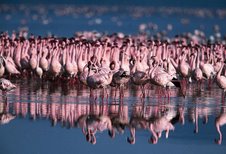
We first met Bob and Kristina an elderly couple that had come to Kenya to mark their lovely 40th anniversary in marriage. The couple had left Samburu national reserve the day before, and had just completed an early morning game drive in L. Nakuru national park. All cheerful and elated with Joy, it was easy to overture and bond with them thanks to the great awe inspiring experiences that kept them smiling all through. To Kristina, seeing Kudus in the wild amidst unique wildlife of samburu was a sought-after memory. In Lake Nakuru, they were lucky to spot the endangered black rhino, while the white rhinos and the stunning panoramic of millions of flamingos roamed were just infront of them. Their itinerary was skillfully and precisely drawn to ensure they touched every heart of the best and unique wilds during their Kenya safari.

Seane story - Australia
The next day we met Sean and party from Australia. No doubt, this young couple must have had a hint of the best way to explore Kenya’s wildlife – camping safari! Their choice to do their Kenya camping safari in August was sheer brilliance as the weather is generally favorable. After breakfast, we proceed to hells gate national park. Sammy the cook had made a yummy packed lunch for the group. Hiking the hells gate was not just a lovely experience but also a great adventure and exercise.

Our choice to set our survey base around the two rift valley lakes – Nakuru and Naivasha was a pre-arranged due to the central location and popularity. Lake Nakuru is Kenya’s premium national park offering a diverse ecosystem and great wildlife spotting within a close range. Lake Naivasha on the other hand hosts the most deluxe vacation resorts and campsites with diverse wildlife and great boating excursions. It is at these two lakes where you can meet tourists with unique and varied itineraries and therefore a chance to obtain views from mixed experiences and different destinations.

Martin Black’s family
We met Martin Black, his mama 79 and three children on the forth day of our program. By then, the group had seen more than they had expected. The two girls were drawing pictures of various wildlife that they had seen, while the young boy was busy playing games and listening to music. Even though this particular group had lived in many places of the world, they openly confessed that Kenya is a ‘paradise’ thanks to scores of wildlife, beautiful sceneries and white-sanded coastal beaches not forggeting the friendly and charming people.

Melywn family - UK
On the fifth day of our analysis, I met the lovely and exciting vacationers of the season – the Melywn’s family from UK. Their driver/guide, Charles made an incredible introduction causing a quick confidence and bond between the two parties. Immediately after briefing, we engaged in a conversation unconscious that we were running behind time. On the way to Naivasha we had great talks as the group shared their experiences and also asked questions on various issues concerning Kenya. The group did a trek in Hells gate national park as well as taking photos of the magnificent Hells gate Gorge, Fischer,s and Central towers and the splendid view of Lake Naivasha from Olkaria hill. The group saw myriad wildlife and inimitable sceneries through out their safari.

Yifat family - Israel
Shalom!! thats how it started. Our last group in this series was Yifat family from Israel. Having visited ‘north of equator’ wildlife parks, they had a great comparison with the lower equator parks. It is amazing how nature is discrete with unsearchable uniqueness. Unlike other African destinations, Kenya wildlife observe the hemispherical rules in that some species are only found on the northern part of equator while others are purely restricted to the southern. Yifat family then proceded to hike the Menengai crater. The crater lies at 2272 meters above sea level and was formed as result of combined rift valley and volcanic activities. The ashy smell from molten lava can be felt up to date while the whole floor is covered by black volcanic rocks and shrubs. On clear days, one can see most rift valley lakes such as Bogoria, Baringo, Elmentaita and the near by Lake Nakuru.

Courtesy of Francis Nyagah

Kenia Safari Adventure crew