Thursday, September 4, 2008

Best moments: Czech meets Kenya at Elsamere

It's amazing how history carries its lure beyond human indulgence. It works like magic, thriving all the emotions, perceptions and feelings beyond imagination. It also fosters culture and brings strong bonds even among the most diverse ethnicities. It is this history that made Tomas Mareth and party from Czech Republic feel part and parcel of Kenya. History made it easy for them to feel 'at home away from home'. In Kenya they got the history magic …...
Tomas Mareth and party were in their long anticipated Kenya safari. The safari was to take eleven days on kenya wildlife safari tour and then reach its best moments in the white sand sun-baked beaches of the Kenyan coast.
The first activity was climbing Mount Kenya. This saw them ascend the premier peak of the equator also famous as – the only snow capped point on the equator - that is according to early explorer Dr. Ludwig Krapf. Sirimon route was the best for them and on the fourth day, they enjoyed the fantastic view of sunrise at Lenana.
The journey to the peak requires an adventurers' heart. From the gate you pass through the rain forest where some trees are unimaginably huge from where you traverse the mangrove forest before reaching 'Old Moses' camp. The second day is even more tasking and involving. 'Think of hiking a distance of 22 kilometers having to pass through rough terrains, boggy soil, and crossing rivers and 'swamps'. All this happen at an attitude above 3000 meters above sea level. It might sound tiresome and involving, but amazingly, the whole journey turns out to be very interesting and rewarding
Unlike 'Cocacola' (Marangu) route in Kilimanjaro where one walks on gradually outlined paths, Sirimon route takes you through great valleys and rocky outcrops. Among the valleys is Makinda, the longest valley in Mt. Kenya which finds its source slightly below the three peaks (Batian, Nelion and Lenana)
When Mareth learnt about Joy Adamson history and how close they were from the jungles in which the famous born free documentary was filmed he was very impressed. He consulted with the group and enquired whether it was possible to have them pass by Joy and George Adamson's museum. "Yes! It's possible". I said.
When the day came to start their Kenya safari, all the arrangements were in order and now it was confirmed by Peter the driver guide that they would pass through Elsa-mere where the Museum is located.
All this time, I had not known why Mareth and the party were so much interested in visiting any trace of Joy Adamson until I learnt it later at the airport …..
Joy Adamson was born in Troppau, Silesia, Austria-Hungary (now Opava Czech Republic – the home country of Tomas and party). She was born Friederike Victoria Gessner as the second of the three daughters (Traute, her and Dorle) of Victor and Traute Gessner who later divorced while she was still a young girl.
Joy married three times in a span of ten years after her first love affair left her heartbroken. She got the name 'Joy' as a nickname from botanist Peter Bally who she got married to as the second husband after World War II making it her first marriage in Africa.
Joy met her third husband George Adamson while on a Kenya safari and they made a home in Kenya. It is while with George that she (Joy) did what turned to be a global legacy.
Tomas told me that in 'Opava', there still stand a house where Joy spent her childhood with her grandma' who she called 'Oma'.
At Elsa mere, Tomas and Party came live with what two decades ago formed a normal lifestyle of Joy Adamson in Africa.

Adventure Travel Crew
Natural Track Safaris

Monday, September 1, 2008

African Safari: The safaris of the season

The peak season of tourism in Kenya has this time been dramatic like no other in the recent past. Many visitors from many countries feared the worst as a result of post election violence that seized Kenya early this year. However, this is a gone case and Kenya is safe, peaceful and a great destination. Altogether, the new Kenya offers more than ever. If you are among those who cancelled their trips to Kenya or changed to a different destination, pole Sana! You missed big time.

Peter and James, (our guides) have just completed two of the most unique and dramatic Kenya holiday safari of the season. They came back and narrated their experiences to Kenya safari desk of Natural Track Safaris. This is what they had to say;-

"It has been long since I handled a camping safari, but this one had its uniqueness" says James. "Ilikuwa mzuri sana, tulifurahi" adds James in Swahili.

James started his narration by giving me a hand written testimonial from the clients. At first, I thought it was a note from Mara Simba Lodge (Where the guests spent their nights in Masai Mara) but it wasn't. The opening remarks of the recommendation gave a picture of a happy writer who wrote in great hurry. I quote;

"Dear James, Winnie and all the members of Natural Track Safaris, We are YAIR, GALIT, OFRI, YONATHAN and TAMIR – Family from ISRAEL want to thank you a lot for the special, great safari trip in Kenya. James our guide was excellent and did for us everything with love ad kindness. Thank you for the food, Lodges, tents, help and wonderful world in Kenya. We hope many groups from all over the world will choose like us to take a good time in Kenya with you. we have been in many places in the world, YAIR is a tourist guide for many years and we know that you, all of you – James, Winnie, Sami and others are very special, professional persons and leaders……………" (See this full original scanned copy of this on the testimonials section of our website http://www.natural-track.com)
Personally, I met this family on their 4th day – the day they were doing a trek in Menengai crater and Hells gate in Naivasha. Both treks were fantastic.

According to James, this group was the luckiest in the jungles, for instance, in Samburu; they saw gerenuk gazelle (the browsing antelope) few meters from the park entrance. The camp was fantastic and the food that Sammy (the safari cook) made was comparable to none.

The morning game drive was climaxed by a unique episode – two lionesses were closing the Ewaso Nyiro River. Of even great interest was how these two lionesses were able to swim through the mighty waters of Ewaso nyiro. This family had also a chance to visit the local people to have an authentic African taste – the traditional Samburu community gives a real experience of unspoiled African culture and tradition, a heritage that has been passed to many generations. It is the Samburu's who have very close similarities with the famous Maasai community in Kenya.

Lake Nakuru national park was the next destination. To get here, they drove through the recently constructed all weather roads through Nanyuki (where the rail builders said enough is enough) and passing through beautiful sceneries and landscapes on the slopes of the Africa's second highest mountain – Mt. Kenya. I have no words to explain the joy that this family had while at Thomson's falls – a re-known attraction along this route named after ancient explorer.

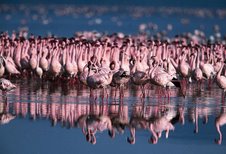
Now they are in Lake Nakuru. It is here that, this lucky family saw one of the most endangered games in the world – The black rhino. In fact, they saw two of them. Unbelievable! James also told me that they saw the white rhinos, Rothschild giraffes, buffaloes, common zebras not forgetting the great spectacular view of millions of flamingos, great white pelicans and the marabou stocks at the mouth of Njoro River. .

"Basically, the whole kenya safari was fun. I might not be able to tell the most fulfilling encounters that this family had, but I can remember baboon cliff, Menengai, hells gate and Mara were more than interesting for them" says James.

On the last day – the family was scheduled to fly back to Israel but lol! – there occurred an incidence that made them to reschedule. They lost there bag that had all their five passports and money. For many tour operators, this could have been a nightmare as they would shun off emergencies but thanks to Natural Track – it knows no surprises. Peter, Winnie and the entire company mobilized all the resources that seemed necessary and of help to the emergency and within two days; the passports were found, new air tickets got and the family flew back to Israel safely.

Whatever happened to them on the last day cannot be compared to the memory these family carried back to Israel. Thanks to all.

Peter and his group on the other hand, had a different story, characterized by confidence, risks, determinations and great virtues. I will tell you about; Lynda and Roger

After missing her flight from Heathrow, Lynda had to take a different flight to connect with Roger in Nairobi. On reaching Nairobi at around 9 am, she queued the long line to get her luggage, lol! It was not there. Still more, there was some mis-information about the exact time that Lynda was to arrive at the airport. I mean the representative who was to pick Lynda from the airport for briefing and transfer to the hotel came way too early only to be told that Lynda was to arrive at noon, that flight got delayed. So she went back to prepare a come back at noon.
By the time Lynda got to the airport at 9 am, it was three hours from the time the representative was told that she (Lynda) would arrive. The great confidence to Lynda, I suppose was to know that Roger was already in Nairobi for he had arrived a day before. Good enough, she could remember the name of the hotel. So, she took a taxi which drove her to the hotel where Winnie (the representative) joined them later.

The big dilemma came on the first day of the safari – Lynda was to choose between, safari and the luggage. Thanks to Winnie who promised to do the later for Lynda. And by the time Lynda reached Nairobi from Amboseli, her luggage was just a call away. Winnie was very helpful to Lynda and more so to Roger, whose Kenya safari could not be a success without Lynda.

Now Lynda has her luggage and joy fills them all. Peter (the guide) shared the merry as they drove to Samburu; he said the journey to Samburu from Nairobi seemed 'fupi' (shorter) than other times. I suppose he learnt the joy magic.

Getting the luggage was Lynda's great joy and marked a new beginning of many things including the safari itself. I met Lynda and roger at Menengai where we did a trekking and proceeded to Hells gate for a caving and rock climbing challenge. It was worth a challenge going in and out of 'Hell'

From Naivasha, they proceeded to the picturesque Mara and then to the white sun baked beaches of Mombasa. If they will share with me the experiences they had in Whitesands, which am sure were great, then I will seek their permission to share it with you – but for now ………

Adios amigo!!

Adventure Travel Crew
Natural Track Safaris
Kenya safari desk

Thursday, August 7, 2008

Kenya safari: the fate of Rhinos

In the beginning of this nature series of African safari and what to expect on a Kenya safari, I promised to give all the information you need for a safari in Kenya. I hope the last two advances have been of great help to you.

Now let's get to this season ……. suppose I ask you a question, "How close have you ever got to a rhino?

In Africa today, the fight for growth of the rhino population is an everyday activity since it was declared an endangered species. Kenya has put up big efforts financially to see to it that rhinos and their habitats have been safe guarded.

It is for this reason that I had to participate in one of the greatest ungulate translocation which took place in Kenya. Kenya Wildlife Service, a body with the mandate of protecting all Kenyan wildlife heritages was spearheading the event. All efforts were geared towards refurbishing of Meru national park and I was glad to be of help in the action.

Due to the intensive tasks involved in translocation, much skills and labor was needed with specific skills required for animal handling.

Rhinos are wonderful animals to look at and even more thrilling when you have an opportunity to get close enough to smell them.

The translocation gave me a great opportunity to observe a rhino at the closest point, touch its hairs on the wrinkled skin, lean on the horn, and see the difference in the mouth shapes and so much more.

Closer look ……
Rhino belongs to the family Rhinoceroteridae with five species placed in four genera. Three of these species are found in south-central Asia and the other two live in Africa south of the Sahara. It is in this region you'll find Kenya, where rhinos inhabit savannahs, shrubby regions and occasionally the dense forests.
Rhino's problem has been its beauty, the horn which is made of keratin (a substance found in human hair and nails). Powdered Rhino horn has been used extensively in traditional medicine in Asia and to make ornamental dagger handles by the Yemen men. The demand is so great that traders are prepared to pay poachers vast sums to kill rhinos for their horns. Because of these, Rhinos have faced wholesale slaughter which led to their unimaginable decline and sweep off in Meru national park in 70's.
To stop these abuse, governments and bodies such as Save the Rhino teamed up together to halt the abusive. Thanks to them, the overall decline of the rhino has been halted, and populations in Africa are beginning to stabilize.
Interesting…….
Now that I hold a 'legacy' of moving rhinos, allow me to quickly share something interesting about African rhino species.
As mentioned earlier, we have two rhino species in Africa namely the black and white rhinos. These two African species live in more open areas than do the Asian species. Their habitat has to generally have access to water, as they usually drink everyday. The white rhinos have a preference of feeding low to the open grounds whereas the black rhino usually browse on leaves and have a tendency to stay hidden. They have been noted to be more active in the evening, through the night and in early morning, spending their days resting in heavy cover.

In general……
The history of the rhino can be traced back to 45 million years ago. The Baluchitherium, an ancestor of the Indian rhino, was the largest land mammal that ever lived. It was 18 feet high and 36 feet long and lived over 20 million years ago.
Rhinos sleep in both standing and laying positions and love to wallow in muddy pools and sandy riverbeds. They penetrate dense thickets by shear force, often leaving behind a trail that other animal's later use. Rhinos run with a cumbersome motion, reaching top speed at a canter. They can, however, attain speeds of up to 45 km per hour for short distances. Basically the black rhino is more solitary and territorial except for the mother-child unit.
White Rhino in Kenya Safari Holiday
Rhinos usually have 1-2 horns. Their horns are dermal growths originally composed of compressed keratin. Both hind and forefeet have 3 digits with a small hoof. They are known to have poor eye sight but strong hearing and smell. The tough and wrinkled skin has very few scattered hairs and the tail ends with stiff bristles.

Breeding……
Female rhinos give birth every 2 years to a single calf, which is active soon after birth and the calf remains with the mother until the next offspring is born. Gestation period is 420-570 days while sexual maturity is reached at 7-10 years for bulls and 4-6 years for cows.They have a life span of up to 50 years.

Groups of adult cows or bachelor bulls are sometimes formed, however, and during the mating season pairs of rhinos may stay together for up to 4 months. Rhinos mark their territories with urine and by dropping their dung in well-defined piles that can reach up to 1 m in height. They often furrow the areas around these piles with their horns and make the piles even more conspicuous.

The black rhino has a wide vocal range and can possibly communicate like an elephant,
through frequencies below the range of human hearing. Breathing is an important part of communication. Unlike the white rhino-calf, the black rhino calf normally runs behind its mother.
Current standing & population
There were an estimated 20,000 black rhino in Kenya in the 1970s. By 1982 the population was reduced to fewer than 400. Since then, their number has increased and now stands at over 450. The number in fenced areas has risen at an average rate of four percent each year when the conditions are good. Since 1984 the Kenyan government has pursued an active program devoted to the recovery of Kenya’s black rhino, with efforts centering on the development of specially protected or fenced sanctuaries on government and private land, such as Lewa.

Rhino populations under custodianship both on private land (Solio Ranch) and in some
State-run areas (such as Nairobi and Nakuru National Park) have provided set up for new populations (including reintroducing animals into an electrified-fence sanctuary inside the KWS-run Tsavo West and Meru National Parks). The private sector thus plays an important part in the conservation of rhino in Kenya and currently supplies many of the animals being used to restock state parks.

Kenya is currently the stronghold of the Eastern African subspecies Diceros bicornis michaeli, a home to about 88 % of the population in 1995. Like South Africa and Namibia, Kenya is doing trans location to set up new populations while aiming to ensure that donor populations
remain productive. The public plight of the black rhino has attracted support from many different areas.

Today, scientists are formulating a method of «fingerprinting» rhino horn based on the nutrient content of each specific rhino conservation area. This will enable them to pinpoint the area a rhino came from, its family group, and even its preferred diet. It is also an important step toward eradicating poaching, as scientists will be able to determine where a rhino was when it was killed.

Today we stop here …… until next issue

Adios amigo..

Adventure travel crew

Kenia Safary
Natural Track

Saturday, August 2, 2008

Kenyan Safari: The world's tallest mammal

If you have been following this series on the African wildlife Experience and what to expect in your Kenyan safari then here is some more great stuff for you. Our nature series this season was features on an informative yet interesting coverage on the Leopard, but a Cranston, a photographer whose love for nature is unending, had a wonderful time in Lake Nakuru and Amboseli national parks heightened us differently.

Right now as I speak, I am in Kenya, a country that is perceived as; a wonderland of treasures, the cradle of mankind and the land of contrasts. The greatest wonder of the world is now on as I had told you earlier in the migration update and many visitors from all over the world are streaming to Maasai Mara to have the first-hand glimpse. Am talking about, the wildebeest migration.

I know you might be wondering why I have to say all this stuff instead of going directly to my point. Well! If I were a psychiatrist, I would have told you "……… this is important as well" of which it is. But my main point here is to prepare you on what to expect when in a safari.
If your expectation of seeing the big five or monster lizard or even some specific species of birds are met, there is always more to see and to learn. Kenya as I said offers a diversity of attractions. That’s what this series is about, so that you can know what Kenya and its diversity has to offer.

This time we will talk about what's interesting about the world's tallest living mammal encoutered a lot on safaris in Kenya.
The giraffe is the world’s tallest terrestrial animal. It's one of the most amazing animals especially because of the long neck that makes it sometimes cumbersome and prone to a couple of problems that we shall see as we proceed.

These African ruminant mammals, Giraffa Camelopardalis, live in open savannahs south of the Sahara and have only one family member, the Okapi. The reticulated giraffes are handsomely patterned in golden browns, with a coarsely netted (reticulated) pattern mainly quadrangular in shape. Males and females have stiff manes along their necks and both sexes have horn-like structures called ossicones on top of their heads between their ears. These ossicones are present at birth in the form of small knobs of cartilage covered with skin and hair which becomes bony nodules with age, and fuse to the skull with time.

Giraffes are widely spread in Africa and Kenya in particular. As Cranston witnessed, it's easy to spot the three species of giraffes in this part of the world.
It amazes to know that giraffes despite being the tallest mammal have seven vertebrae in their neck, the same with man and most other mammals. Only that the vertebrae are much bigger. The tail measures up to one yard with a terminal tuft of stiff, black hair.
They have long tongues that measure 18-21 inches long. The inner part of the tongue is pink in color, and then changes to a purplish-black color for the last 6 inches that are commonly visible. ……… I wish you see them browse on the acacias.

A quick look at the adaptations of the Giraffe
Giraffes have long legs and neck, long, tough, prehensile tongue, and leathery mouth for food gathering. Their coloration is protective. They are tall with good eyesight for watchfulness. Giraffes have high blood pressure (240/160) for pumping blood to the brain. Herds are small and loosely constructed of 5-15 individuals, consisting of one bull with females and young. Other bulls are solitary or in pairs.

Another interesting thing about the giraffe is that they usually sleep standing up for only 1-12 minutes. Going for a month without water is also possible as an adaptation to long drought periods in their native areas.
Giraffe is browsing ruminant that eats regularly throughout the day, they prefer young leaves and shoots at tops of acacia trees which sometimes ends up shaping the regularly visited trees. During a safari in Kenya, from Mid morning to around 16.00 hrs, they are seen standing, chewing the cud. They prefer to drink regularly, but can go without water for several days and can run up to 35 mph. Predators are leopards (prey on young), lions, and man. Giraffes kick with their hooves and slam with their heads.

Off springs.....
Giraffes are non-seasonal breeders, usually producing one calf after a gestation period of 14-15 months. Newborn giraffe calves begin their lives by falling up to about 6 feet to the ground, and weight 87-107 lbs. They become sexually mature between 3 and 4 years of age and have a life span of about 25 years and up to 30 in captivity. Full body size is not reached until five years of age.

It is interesting to note that...
The carotid artery that carries blood from the heart to the head is thick, muscular and elastic, ballooning when the giraffe stoops to absorb increase in pressure. When the giraffe raises its head, a series of check valves in the inch-wide jugular vein prevents a sudden back flow from the head, emptying the brain. They are most vulnerable to predators when drinking or lying down. They may see red-orange, yellow-green, purple, green and blue as colors. Their scientific name means "camel-leopard-like one who walks swiftly." Their spot patterns are as individual as fingerprints. They are among the very few mammals that cannot swim at all.
Head/shoulder length is approximately 13' for the male. Shoulder height is 8-12', overall height 15-19' and Weight is 1,100-2,800 lbs.

Giraffe’s have a variety of sounds but they are rarely heard. They may grunt of snort when alarmed, females may whistle to call their young, and calves can bleat
There are more to learn and see in the giraffe especially the walking style but, I won't tell you now until you make arrangements to see them. Almost every large park and reserve in Kenya has at least one species. But for you, I would recommend you take a safari to Samburu and see the most beautiful of the three and then proceed to Lake Nakuru and see the largest of the three yet the most endangered. From there you can voyage to Amboseli or Mara and take pleasure in the look of the Kenyan named Maasai giraffe. An extension to the coastal beaches of Kenya is fare as well…….

Next time we look on the leopard, probably the most beautiful cat ………… Join me then!!

Adventure Travel Crew

Kenya Safari
Natural Track

Tuesday, July 29, 2008

African Safari: The pioneers of Migration

Adventure travel crew
Natural Track Safaris

There are three species of Zebra occurring in Africa today. An Kenyan safari in East Africa reveals two of them . Burchels zebra, (also known as Common or Plains Zebra) is the most widespread in East Africa occurring mainly on the lower part of Equator. The other one is Grevy's Zebra (named for Jules Grevy, a president of France in the 1880s who received one from Abyssinia as a gift). It is the most common in the northern Kenya on the upper side of Equator. The third species, Equus zebra, is the mountain zebra, found in southern and southwestern Africa. The Burchell's (plains) have for along time flagged off one of the new seven wonder of the world in Maasi Mara, Kenya 'The Wildebeest migration'

As one of the great survivors, Zebras have excellent eyesight, a keen sense of smell and are capable of running 40 mph. Every zebra has its own pattern of stripes (which makes it easier for researchers). Zebra belong to the family Equidae, hoofed animals characterized by one toe. This includes all horses and horse-like animals of the world. This single hoof is probably an adaptation for fast motion on hard ground.

The stripes help them confuse predators by making it hard for them to single out any one of them while in motion, a thing that your Kenya wildlife safari guide will not hesitate to demonstrate while on safari. They also interfere with the depth perception of predators. Although there is no color variation between the sexes, plains zebras do vary in color and pattern across their range. Moving from the north to the south of this specie's range, there is a tendency for the stripes on the hindquarters to become less well defined. They have long jaws, so that when they are grazing, their eyes are still high enough to watch for predators. With eyes located on the side of their head, zebras have a much wider field of vision. They require constant water supplies and they need to drink every day.

Habitat...
Zebras inhabit open, grassy plains or well-grassed woodlands. They can also be found on mountain slopes up to 14,500 feet (4,420 m). Existing wild species include the Asian wild horse, Asian and African wild asses, and zebras (found only in Africa). Species of zebra include the Grevy’s zebra the mountain zebra , the extinct quagga zebra and the plains (Damara or Burchell) zebra named after naturalist W. J. Burchell.
Zebras are extremely social animals that share their range with a wide variety of other grazers and browsers, particularly wildebeest, kongoni, gazelles, Oryx and other antelopes. They live throughout eastern and southern Africa. Their home ranges vary in size from 12-240 square miles (31-622 sq. km).
Plains zebra rely almost totally on a variety of grasses, along with some additional browse like leaves and twigs.

Reproduction.....
In the nature females reach reproduction maturity in 2-4 years. Males are able to compete for mares after they reach about 4 years of age. When gathering females for breeding, rival stallions compete fiercely by kicking and biting. Once a male establishes a harem, ownership of that harem is rarely disputed, unless he is unfit. The gestation period of a zebra is about 12 months. Since a mare may come into estrus within days of giving birth, she can conceive almost yearly.
The female gives birth to usually one foal, as twins are rare. At birth, a foal weighs about 70 pounds (32 kg), can stand almost immediately and run within a day. Although a foal may graze within a week of birth, they continue to suckle for up to 16 months. The average juvenile mortality is about 50%, mostly due to predation by lions and spotted hyena.

Life Cycle..
Plains zebra are social animals. Although they may live alone, they usually form bachelor groups and small families of 5-20 animals, consisting of a dominant male, mares and offspring. These zebras can either be sedentary or migratory; their lifestyle is dependent on the availability of food. Where food is mostly plentiful year-round, such as the Ngorongoro Crater in Tanzania, they lead a sedentary life. In seasonally dry areas like the Serengeti of Tanzania, small families of plains zebra gather to form large herds that migrate in search of food. Staying together as a family group within large herds, they migrate up to 500 miles (805 km) per year during their circular trek to and from the Serengeti Plains. Of interest, it is the responsibility of an adult male (often the oldest), to guide the family as they move from area to area and ensure that they never wander too far from water.Plains zebra are noisy and restless animals, probably because of predators. They have a distinctive call, which may be described as a frequently repeated barking whinny. Their whinny is more similar to a donkey whinny than a horse whinny. At night, families gather together while one family member remains awake to look out for predators
Special note on Grevy's Zebra.

The social organization of the Grevy‘s zebra is very different to that of the Burchell‘s. Grevy‘s follow a territorial system which is adapted to arid environments where resources are patchily distributed. Breeding males stake out territories of between 7-12 square kilometers, containing water and grazing resources which they will defend for up to seven years. As non-lactating females range widely in search of those resources, the male is able to mate with these females as they pass through his territory.

The population of Grevy's zebra has declined a lot and in some area including Ethiopia and Somalia they cannot be found. This is through poaching for their skin and meat till 1977 and overgrazing. Another issue is that only 0.5% of their range is protected. Of the world population (less than 2,300) over 20 % are found on Lewa, Kenya. This is because Lewa is a protected range and there is no competition from grazing.

kenia safary desk
Natural Track Safaris

Saturday, July 26, 2008

They are here!!!!!!!

Just recently, the phenomenon wildebeest migration was recognized as the Seventh wonder of the world. This natural event takes place on July – October in Maasai Mara which lies 270 kilometers south east of Nairobi. The animals move from northern Serengeti plains in Tanzania across Mara and Telek Rivers in Maasai Mara.

If you have not been following this series or if this is your first time you are hearing about the wildebeest migration, here is an eye witness occurrences on this year's migration which has just started.

The light showers that swept across the central Mara over the last week have drawn more herds from the northern Serengeti. The Mara River, about 3 kilometers north of the south-Mara bridge, has been the main arena over the past few days. Heavy crossings have taken place as thousands of the Serengeti herds crossed west on the Mara Triangle. The river is still low, making the crossing a bit easy for the animals. Once in the Mara, these herds have taken a traditional route splitting into two, with one group heading west and crossing over the Mara River while the other, north into Meta and towards Burrungat plains.

Our guests had a week full of Kenya safari excitement on game drives due the close proximity of the herds. and we are assured of even better things as the migration progresses! It's amazing to know that although this phenomenon is widely known as the wildebeest migration, it is the burchell's zebra who pioneer the pilgrim and they are usually the first ones to cross Mara river.

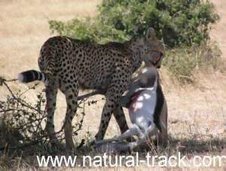
I tend to believe, the main characteristic witnessed in Mara – that of the largest mass movements of ungulates is not the sole stuff that was considered to rate this event as a global wonder, but the drama itself. Listen! As these ungulates move in millions, thousands and hundreds, your interest should be focused on the predators rather than the 'Ngunus' since they will definitely appear in your shots whether still or in video slots. Look out for the drama of: - the crocodiles in Mara and Telek rivers, the lions, leopards, and my favorite cat the cheetah, as they follow and hunt the herbivores. If you are not able to spot the carnivores, just look out for the scavengers both the hyenas and vultures and you will no miss one or two carnivores enjoying a kill as the vultures wait impatiently.

The Northern (Loita) and the southern (Serengeti) herds have now merged on the south Mara triangle. The converging point is a recently burnt area where new nutritious shoots are beginning to sprout after the recent light showers. An interesting occurrence we have witnessed in the last two years, some of the Loita herds are starting to cross back at Paradise crossing point onto the eastern side of the river - where they had crossed the just previous week! The remaining animals from these herds have over the past week been streaming in small numbers towards Paradise Plains, with some crossing westwards onto Mara conservancy.
About the predators, Lion sightings were remarkably high over the past week. There are not many lion cubs at the moment, but some females are expected to give birth over the next couple of months. Olkiombo Pride has settled east of Mara Explorer about 1.5kms along the main road from the airstrip. The Ridge Pride is still very active, with many attempted hunts being witnessed during the day in the past week as they respond to the pounding hooves of the migrating herbivores. The concentration of the herds is however still lower in their territory.
Encounters with cheetahs have now become more frequent than in the previous weeks. Leopards are also starting to get active and their sightings have improved remarkably. As the migration may have taken the name of Maasai Mara wildebeest migration, it will be of no importance to tell you about Mara alone without mentioning the Serengeti.
The movement from Serengeti to Mara is also very interesting although it might not be as dramatic as the Mara triangle episode. This is how it goes – When the rain stops on May/June, they start to migrate from south of Serengeti to the central and west of Serengeti plains stretching as far as Grumeti game reserve and lake Victoria. From July they move northwest of Serengeti in Bolonga and Ikorongo game reserve and finally plunge into to Mara.
The first thing you should do when you see the first wildebeest in Mara, I guess is to clap for them. Just imagine the long journey they have to take every year sometimes passing through dry areas and going for days without water. This means only those which can do without water for a long period and can adapt to the poor forage reach Mara. You can also imagine the challenge of crossing Grumeti, Telek and Mara rivers. Clap anyway!
Around November, most of the pastures in Mara are exhausted and the animals start the cycle again to now greener pastures in south of Serengeti, Ngororongoro and Maswa game reserves. The best place to be if you missed the Mara and Telek drama is Lobo or Loliondo area in October and November. Likely, at this time, wildebeest and Zebras have made their way to south Serengeti, giving birth in a very short space of time making places such as Ndutu woodland and the surrounding plains a massive spotlight for predators.
You might be wondering – are the plains left empty during the migration? The answer is No. The migration does not mean that the plains are completely empty. There are many animals which do not follow the migration pattern and have become residents both in Mara and Serengeti. These include predators such as lions, leopard and cheetahs while herbivores include some wildebeest, Zebras, Gazelles, Impalas, Topi to mention but a few.
Although the migration has become a core attraction in Mara, it is still a lifetime experience to do an  Kenya wildlife safari and visit Mara anytime of the year. There is a lot of good stuff………
See you there!

Wednesday, July 16, 2008

African Fund for Endangered Wildlife (AFEW)

June 2008, Africa Fund for Endangered Wildlife (AFEW), held its price giving day for the National Annual Environmental Essay and Art Competition. The event took place at their Kenya headquarters widely known as the Giraffe Centre. The event also commemorated AFEW's 25 years in conservation

Natural Track Safaris was in the forefront in making this event a success. The company has continued its bonafide determination in environmental conservation, sponsored the events by contributing to the awards for the winners.

The function was lead by the Director of Kenya Wildlife Service (KWS), Mr. Julius Kipng'etich. He urged the young generation in Kenya and all over the world to embrace the spirit of conservation.
He urged the sponsors to continue supporting conservation initiatives since "……nature has a way of paying back"

Natural Track Safaris are proud to support AFEW Giraffe centre and other organizations in their efforts to conservation.

Thanks to all our travelers, for helping us to stretch our arm strongly to conservation while you enjoy safaris through unbeaten and natural tracks of Kenya and East Africa.

Adventure Kenya safari crew
Natural Track Safaris